Product Review
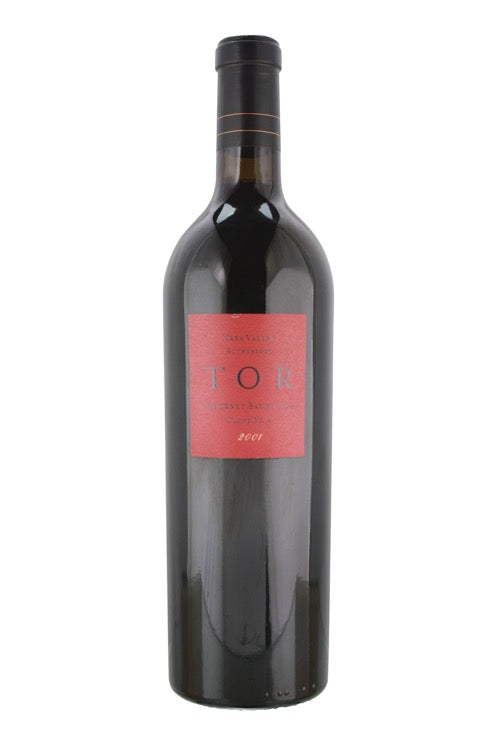
The most evolved, the 2001 Cabernet Sauvignon Clone 4, comes from an old Beaulieu Private Reserve vineyard. It exhibits sweet loamy soil, kirsch, black currant, cedar and spice box characteristics in its full-bodied, soft, silky, sexy personality. Enjoy it over the next 7-8 years. Recent vintages from Tor Kenward probably eclipse what he achieved early in his solo winemaking career, but both of these nearly fully mature 2001s are outstanding.
Cabernet Sauvignon is one of the most prominent dark-skinned grape varieties except Merlot in terms of area under vines, but which comprises our largest selection of wines. Grown in just about every wine producing region and climate, Cabernet Sauvignon can express a huge range of aromas, from green peppers in cool climates through to dark jammy fruit in hot regions. Common aromas include blackcurrants, mint, graphite, and forest floor, to name a few. Maturation in small oak barrels can develop a complex range of aromas from cedar wood, cigar box and tobacco to eucalyptus and undergrowth. Cabernet Sauvignon’s success is partly due to its ability to adapt to a range of soils and climates. It is the main constituent of the Bordeaux blend in the revered communes of Pauillac, St. Estephe and St. Julien, and has achieved equal success in California’s Napa Valley. It is grown extensively throughout Southern Australia, with some outstanding examples from the Terra Rossa soil of Coonawarra. Cabernet Sauvignon also plays an increasing role in Tuscany, Italy, where it is blended with native varieties such as Sangiovese to produce the Super Tuscans.
California is one of the most diverse wine producing regions of the world. Although it has a history spanning over 200 years, it has experienced most of its growth in the last fifty years. The regions of Napa Valley and Sonoma County have become as renowned as France’s Bordeaux and Burgundy. While Cabernet Sauvignon, Pinot Noir, and Chardonnay are by far the most popular fine wine varieties, producers in the Golden State have also experimented with an unparalleled array of diverse varieties, including Zinfandel, Syrah, Nebbiolo, Sangiovese, and Tempranillo.
Red wine is wine made from dark-coloured grape varieties. The color of red differs based on the grapes variety or varieties used.Interestingly, black grapes yield a juice that is greenish-white. The actual red color comes from anthocyan pigments (also called anthocyanins) from the skin of the grape (exceptions are the relatively uncommon teinturier varieties, which produce a red colored juice). Most of the production centers around the extraction of color and flavor from the grape skin.