Product Review
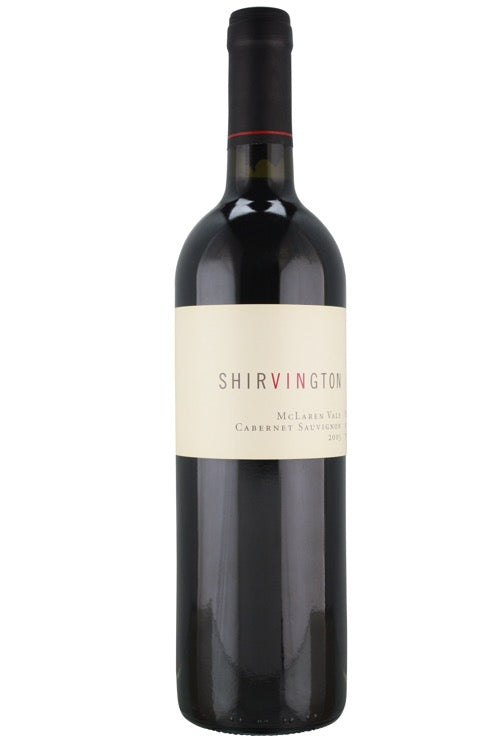
The 2003 Cabernet Sauvignon offers up aromas of cassis liqueur, graphite, toast, smoke, and camphor along with huge body, gorgeous sweetness as well as purity, a multilayered texture, and a colossal finish. I would opt for drinking it over the next 7-8 years, but keep one bottle back until age 12-15. There is so much here it is hard to believe this wine will collapse after 8-10 years of age. Interestingly, this 2003 does not appear to be quite as powerful or concentrated as the 2002s or 2001s, but that’s like splitting hairs. The evolution of this 2003 will be fascinating to follow.
Cabernet Sauvignon is one of the most prominent dark-skinned grape varieties except Merlot in terms of area under vines, but which comprises our largest selection of wines. Grown in just about every wine producing region and climate, Cabernet Sauvignon can express a huge range of aromas, from green peppers in cool climates through to dark jammy fruit in hot regions. Common aromas include blackcurrants, mint, graphite, and forest floor, to name a few. Maturation in small oak barrels can develop a complex range of aromas from cedar wood, cigar box and tobacco to eucalyptus and undergrowth. Cabernet Sauvignon’s success is partly due to its ability to adapt to a range of soils and climates. It is the main constituent of the Bordeaux blend in the revered communes of Pauillac, St. Estephe and St. Julien, and has achieved equal success in California’s Napa Valley. It is grown extensively throughout Southern Australia, with some outstanding examples from the Terra Rossa soil of Coonawarra. Cabernet Sauvignon also plays an increasing role in Tuscany, Italy, where it is blended with native varieties such as Sangiovese to produce the Super Tuscans.
Accounting for nearly half of the country’s production, South Australia is one of the most important wine producing regions and consequently reflects the majority of our selection of Australian wine. Production is focused in the south eastern corner around Adelaide where the sub-regions Barossa Valley, McLaren Vale, Adelaide Hills, and Clare Valley are located. Further south in the state is the Limestone Coast Zone where the cooler sub-regions of Padthaway and Coonawarra produce some of the country’s finest Cabernet Sauvignon.
Red wine is wine made from dark-coloured grape varieties. The color of red differs based on the grapes variety or varieties used.Interestingly, black grapes yield a juice that is greenish-white. The actual red color comes from anthocyan pigments (also called anthocyanins) from the skin of the grape (exceptions are the relatively uncommon teinturier varieties, which produce a red colored juice). Most of the production centers around the extraction of color and flavor from the grape skin.