1
/
of
1
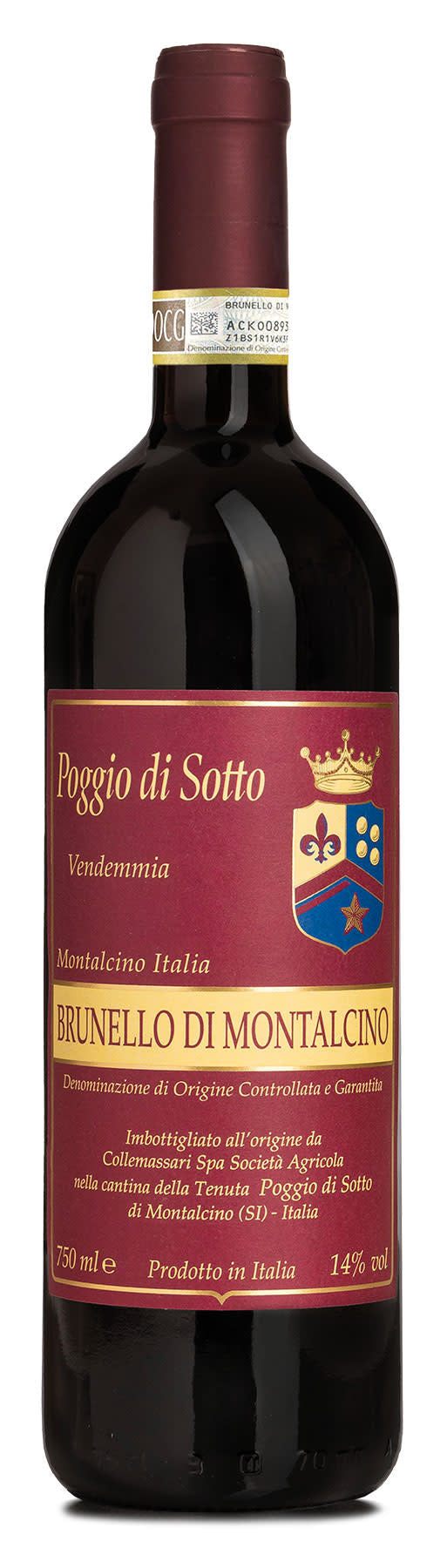
Poggio di Sotto Rosso di Montalcino - 2019 (750ml)
Regular price
$275.99
Sale price
$275.99
Regular price
$299.99
Unit price
/
per
Shipping calculated at checkout.
The Poggio di Sotto 2019 Brunello di Montalcino remains a little closed, even rigid, at the moment. It can be compared to the cool 2013 and 2016 vintages that both required an extra five or six years before they started to shine. However, there's no escaping the power that remains just under the surface. You feel it budding and yearning to break free. Dark fruit aromas fold into crushed stone, grilled rosemary and blue flower. It's fun to taste this wine next to the 2019 Brunello di Montalcino Riserva because you really see how much further this vintage will require in the cellar. Both wines remain tight and nervous at this point but are full of potential. 98+ Points, Wine Advocate
Share :

- varietal
- Region
- Type
- Reviews

By far the most significant variety in central Italy, it is the main grape in 25 of Tunscay’s 42 DOCs and also the backbone to the region’s most highly acclaimed wines. It’s capacity to adapt and evolve according to its suroundings is partly why it has acquired so many clones and synonyms. In Chianti Classico it is often referred to as "Sangioveto", while in the towns of Montalcino and Montepulicano (not related to the variety grown in Abruzzo) it goes by "Brunello" and "Prugnolo Gentile" respectively. Other synonyms include "Morellino" in southern Maremma, and "Nielluccio" in Corsica. With this in mind it is no surprise there is such variety in styles, varying from light young wines like Chianti Classico all the way through to gloriously rich and powerful Brunellos that can benefit from decade or more bottle maturation. Sangioveses that see little to no oak, typically show bright, tart red fruit of cherries and redcurrants while olives, herbs, and meat juices are noted in more savory examples. The grape’s acidity makes it a good accompaniment to food which is also high in acidity. Tomato based dishes and a great variety of Italian cuisine can pair incredibly well.
Tuscany is practically synonymous with Italian wine. Red wine, principally made from Sangiovese, accounts for most of the region’s production. Whether it’s a light Chianti, bold Brunello di Montalcino, or fruit-forward Super Tuscan there is a wine for just about everyone. Other sub-regions within Tuscany include Maremma, Bolgheri, and Rosso di Montalcino.
Red wine is wine made from dark-coloured grape varieties. The color of red differs based on the grapes variety or varieties used.Interestingly, black grapes yield a juice that is greenish-white. The actual red color comes from anthocyan pigments (also called anthocyanins) from the skin of the grape (exceptions are the relatively uncommon teinturier varieties, which produce a red colored juice). Most of the production centers around the extraction of color and flavor from the grape skin.