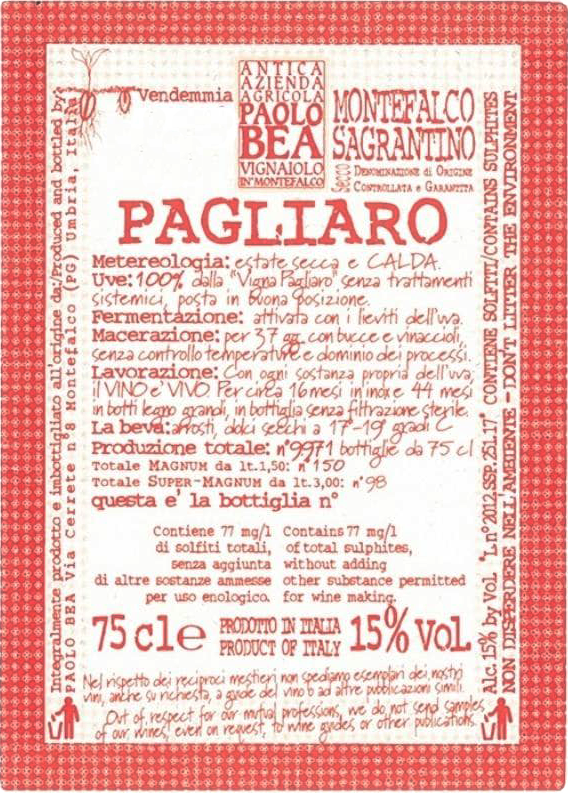
Paolo Bea Montefalco Sagrantino VV Pagliaro Secco - 2015 (750ml)
Paolo Bea Montefalco Sagrantino VV Pagliaro Secco - 2015 (750ml)
Regular price
$139.99
Sale price
$139.99
Regular price
$139.99
Unit price
per
Shipping calculated at checkout.
Importer's Notes:
The fabled local grape of Montefalco is the Sagrantino and the Pagliaro vineyard, situated at 1,300 feet in altitude, is dedicated in large part to this grape variety. The harvest of Sagrantino normally occurs during the second half of October. The cuvaison extends for forty to fifty days. The wines is then aged for one year in stainless steel, another two years in large Slavonian oak barrels and, finally, spends one more year in bottle (the wine, like all Bea wines, is unfiltered) before release. Annual production from the Pagliaro vineyard is 15,000 to 20,000 bottles.
The 2015 Montefalco Sagrantino Pagliaro is spicy and sweetly scented, opening with a burst of exotic sweet curries, dusty rose, currants and tobacco. Here the energy is dialed up a notch, matching silky textures and mineral-tinged red and black fruits that gain tension through a saturation of primary concentration as fine tannins mount toward the close. A slight twang of bitterness lingers through the lightly structured finale, yet with a burst of inner sweetness that balances it all out beautifully. The 2015 will benefit from further cellaring, yet it's hard to keep my hands off of it already. But, waiting will provide the most reward. - Eric Guido July 2022.
- varietal
- Region
- Sub - Region
- Type
- Reviews