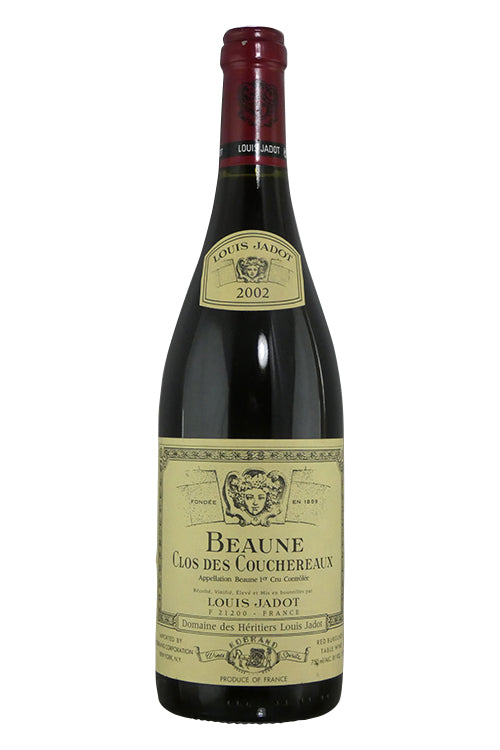
Product Review
Jacques Lardière describes 2002 as "much better in white than I originally thought. As with the reds, the vent du nord was the key but it was also necessary to wait to harvest. For example, we began the harvest for our whites after that of the reds and this is the first year that we brought in pinot before chardonnay. It was very dry for most of the year in 2002 and we needed the rain to kick start the ripening process and for some reason, it took a bit longer for the chardonnay to reach optimal ripeness. The resulting wines are very rich and as a consequence I elected to do less bâtonnage than usual but we added a bit more wood. Another curiosity about 2002 is that the average white did not fully eat its sugar until July, which means that the wines have had a lot of gas during the summer, which helped protect them from the heat even though we have a very deep and cool cellar here. In terms of successes, 2002 is the vintage for Puligny and I also very much like how St. Aubin did." A few of the upper level win
Pinot Noir is responsible for some of the world’s finest wines. Famed for producing the red wines of Burgundy and the Côte d’Or in particular, it is now widely grown in cool climates across Califonia and Oregon, and with increasing success in New Zealand. Although typically used to produce varietal wines, Pinot Noir makes a significant contribution in the wines of Champagne, where it is vinified as a white wine and blended with Cardonnay and Pinot Meunier. On the whole, fresh summer fruit of strawberries, raspberries and red cherries tend to be the identifying qualities, however richer versions express darker fruit including black cherries (kirsch), cherry cola, leather and violets to name a few.
Two hundred miles south east of Paris lies the famous and historic wine region, known in French as Bourgogne. The Cote d'Or, the heartland of the region, consists of two distinct sub-regions split on either side of the town of Beaune.The Côte de Nuits to the north, includes the famous villages of Vosne-Romanee, Gevrey-Chambertin, and Nuits-Saint-Georges and are known primarily for making red wine from Pinot Noir.Although The Côte de Beaune to the south still makes some magnificent reds (see Volnay and Pommard), white wine made from Chardonnay is the main focus. The most famous villages are Puligny-Montrachet and Meursault. Burgundy has three other important regions. The village of Chablis (exclusively Chardonnay) encompassing the region's most northerly vineyards. The Côte Chalonnaise and Mâconnais to south are quantitatively speaking more important. Agriculture is more diverse with a significant portion of the land devoted to livestock and arable farming.
Red wine is wine made from dark-coloured grape varieties. The color of red differs based on the grapes variety or varieties used.Interestingly, black grapes yield a juice that is greenish-white. The actual red color comes from anthocyan pigments (also called anthocyanins) from the skin of the grape (exceptions are the relatively uncommon teinturier varieties, which produce a red colored juice). Most of the production centers around the extraction of color and flavor from the grape skin.