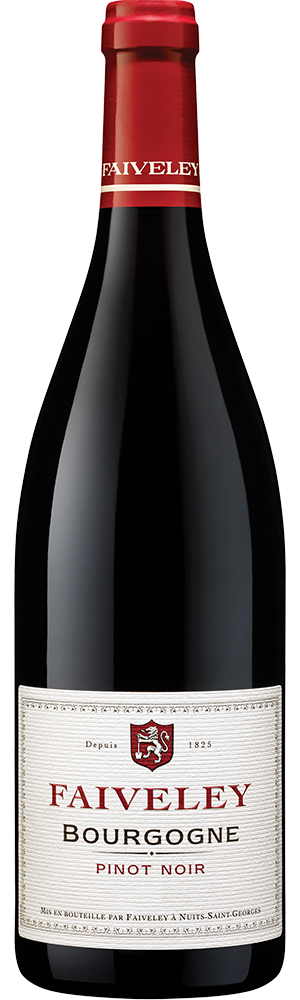
Pinot Noir is responsible for some of the world’s finest wines. Famed for producing the red wines of Burgundy and the Côte d’Or in particular, it is now widely grown in cool climates across Califonia and Oregon, and with increasing success in New Zealand. Although typically used to produce varietal wines, Pinot Noir makes a significant contribution in the wines of Champagne, where it is vinified as a white wine and blended with Cardonnay and Pinot Meunier. On the whole, fresh summer fruit of strawberries, raspberries and red cherries tend to be the identifying qualities, however richer versions express darker fruit including black cherries (kirsch), cherry cola, leather and violets to name a few.
Two hundred miles south east of Paris lies the famous and historic wine region, known in French as Bourgogne. The Cote d'Or, the heartland of the region, consists of two distinct sub-regions split on either side of the town of Beaune.The Côte de Nuits to the north, includes the famous villages of Vosne-Romanee, Gevrey-Chambertin, and Nuits-Saint-Georges and are known primarily for making red wine from Pinot Noir.Although The Côte de Beaune to the south still makes some magnificent reds (see Volnay and Pommard), white wine made from Chardonnay is the main focus. The most famous villages are Puligny-Montrachet and Meursault. Burgundy has three other important regions. The village of Chablis (exclusively Chardonnay) encompassing the region's most northerly vineyards. The Côte Chalonnaise and Mâconnais to south are quantitatively speaking more important. Agriculture is more diverse with a significant portion of the land devoted to livestock and arable farming.
Bourgogne is both the French name for the region of Burgundy and of the most basic and generic appellation within it. The region's white wines at this level include: Bourgogne Blanc, which is primarily Chardonnay but with the permitted addition of Pinot Gris and Pinot Blanc in small amounts; and Bourgogne Aligoté, containing just Aligoté. For reds, there is: Bourgogne Rouge; mainly Pinot Noir, although Gamay can be used if made in Beaujolais; Bourgogne Passetoutgrains, which is predominantly Pinot Noir, must be a third Gamay. Bourgogne Rosé is also made but in very small quantities. Because Bourgogne can encompass such wide range of wines it is best to look for an additional suffix or description, such as the village or producer for hints about the wines provenance and quality.