Product Review
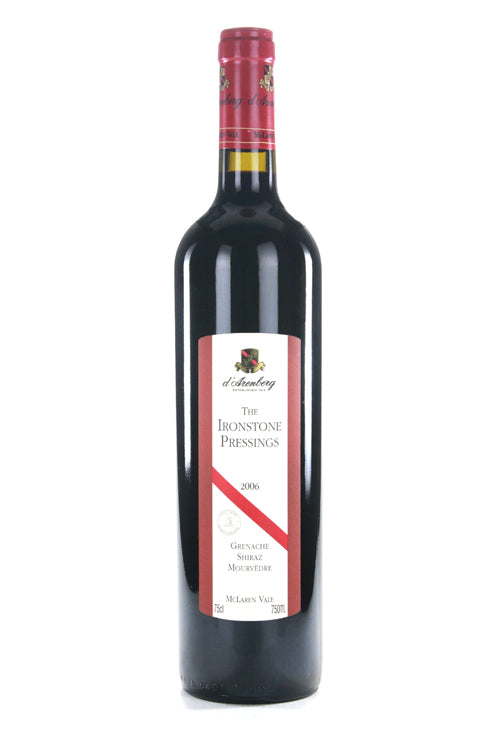
The 2006 Ironstone Pressings Grenache (70%)-Shiraz (25%)-Mourvedre (5%) offers a complex nose of cedar, leather, espresso, spice box, violets, black cherry, and blueberry compote. On the palate it offers up gobs of spicy, savory fruit, lovely integration of oak, tannin, and acidity, and a 45-second finish. Cellar it for 4-5 years and drink it from 2013 to 2026.
D’Arenberg has been owned and operated by the Osborn family since its inception in 1912. The portfolio, with a focus on the Rhone varieties, is wide ranging and value-oriented from top to bottom. The winery produces a bevy of value priced reds and whites that were reviewed in Issue 178. They should not be overlooked. At the higher end of the portfolio there is one white wine on which to report.
Grenache has claims to have originated in Spain and Sardinia where it is known as Garnacha and Cannonau respectively. No matter where it originated this sun-loving grape has spread with great popularity across the world. The grape’s compatibility with regions that offer long sunny summers ensures a high build up of sugars and conversely low acidity. This and its soft tannin make it a great blending grape with firmer, more structured varieties such as Syrah and Mourvedre to form the trio blend often called GSM. Grenache is frequently grown alongside its blending partners in the esteemed regions of Chateauneuf-du-Pape in the Rhone valley and accross South Australia. Unlike a lot of other varieties Grenache needs relatively little attention and is quite happy to be left on poor, unirrigated soils. Because of this hearty nature, pockets of old, neglected, but still productive vines have been found around the world. With enough pruning, these old vines yield small amounts of intense fruit with spectacular results in varietal wines. Depending on where it is grown and how it is handled Grenache can vary from earthy and peppery to jammy red and black fruit with sweet spice qualities. It is also the key constituent (at least 50%) in the wines of Banyuls, one of France’s finest Vins Doux Naturels appellations.
Accounting for nearly half of the country’s production, South Australia is one of the most important wine producing regions and consequently reflects the majority of our selection of Australian wine. Production is focused in the south eastern corner around Adelaide where the sub-regions Barossa Valley, McLaren Vale, Adelaide Hills, and Clare Valley are located. Further south in the state is the Limestone Coast Zone where the cooler sub-regions of Padthaway and Coonawarra produce some of the country’s finest Cabernet Sauvignon.
Red wine is wine made from dark-coloured grape varieties. The color of red differs based on the grapes variety or varieties used.Interestingly, black grapes yield a juice that is greenish-white. The actual red color comes from anthocyan pigments (also called anthocyanins) from the skin of the grape (exceptions are the relatively uncommon teinturier varieties, which produce a red colored juice). Most of the production centers around the extraction of color and flavor from the grape skin.