Product Review
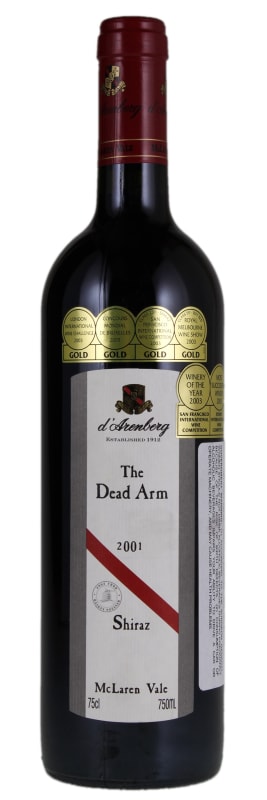
Readers should be on the look out for the 2001 The Dead Arm Shiraz, one of the greatest examples of this cuvee. Its dense black/purple color is accompanied by celestial aromas of melted licorice, graphite, blackberries, cassis, incense, anise, and toasty oak. Fabulously concentrated, with great purity, an unctuous, viscous texture, and an amazingly long, 60-second plus finish, this fabulous baby will need 5-6 years of cellaring, and should drink well over the following 20-25 years.
Chester Osborn, the remarkable person behind this enormous array of both impeccably high quality and value-priced wines, deserves considerable accolades for what he is able to achieve at all price ranges. If you love Australian wines, d’Arenberg is a winery to seek out as these offerings all possess abundant soul as well as character. In short, the accolades that proprietor/winemaker Chester Osborn receives not only from The Wine Advocate, but virtually everybody in the wine world, are all well deserved.
Depending on where it's grown and how it's made, the variety has two names. In France, where it goes by Syrah, it makes a huge contribution to the red wines of the Rhone Valley. In the southern Rhone villages of Chateauneuf-du-Pape, Gigondas, and Vacqueyras it is blended with a number of varieties but mainly Grenache. It is in the northern Rhone, including Hermitage, Crozes-Hermitage,Côte-Rôtie, St. Joseph, where it most often stands out on its own, and is only occasionally blended with the region's white grapes. More recently, in the late 20th Century, Shiraz has put Australian producers such as Penfolds and d’Arenberg on the fine wine map, with cult wines like "Grange" and "The Dead Arm". Generally speaking, the style from the old world is more savoury, expressing aromas of pepper, cured meat and leather. The hotter climate experienced in Australia results in more upfront, dense and even jammy fruit. The grape has also taken off with rapid success in California and Washington, as well as South Africa and New Zealand. Producers in these regions often name their varietal wines according to the style they intend.
Accounting for nearly half of the country’s production, South Australia is one of the most important wine producing regions and consequently reflects the majority of our selection of Australian wine. Production is focused in the south eastern corner around Adelaide where the sub-regions Barossa Valley, McLaren Vale, Adelaide Hills, and Clare Valley are located. Further south in the state is the Limestone Coast Zone where the cooler sub-regions of Padthaway and Coonawarra produce some of the country’s finest Cabernet Sauvignon.
Red wine is wine made from dark-coloured grape varieties. The color of red differs based on the grapes variety or varieties used.Interestingly, black grapes yield a juice that is greenish-white. The actual red color comes from anthocyan pigments (also called anthocyanins) from the skin of the grape (exceptions are the relatively uncommon teinturier varieties, which produce a red colored juice). Most of the production centers around the extraction of color and flavor from the grape skin.