Product Review
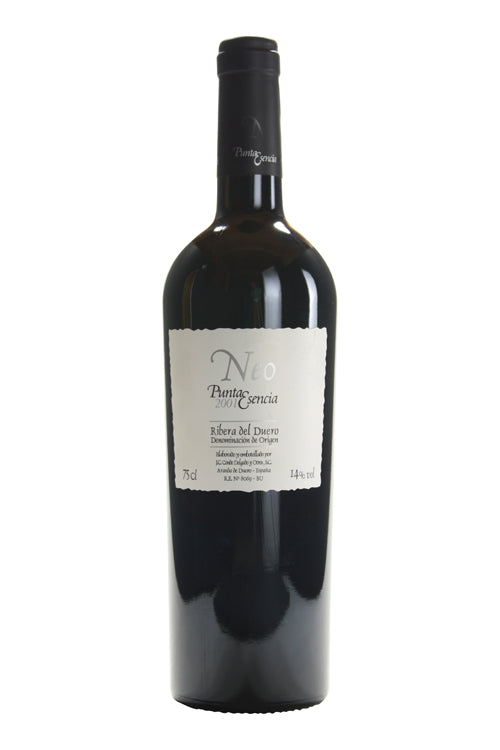
A brilliant effort from 80-year old Tempranillo vines, aged 20 months in new French oak, and bottled without filtration, Fernandez has hit the bull's eye with the impressively endowed 2001 Neo Punta Esencia. More similar to Bordeaux first or second-growth than a Spanish Ribera del Duero, it boasts an inky/ruby/purple color as well as a sensational perfume of espresso roast, graphite, black currant liquer, and pain grillé. Full-bodied and youthful, tasting more like a barrel sample than a finished wine, it is loaded with potential and built for the long haul. My instincts suggest cellaring 2-3 years, and drinking it over the following 10-15.
Coined by Jancis Robinson as "Spain’s answer to Cabernet Sauvignon," its style varies significantly depending on terroir and the wine-making techniques used. Cooler regions and stainless steel fermentation tend to produce Tempranillos with fresh strawberry and cherry like fruit, similar in body to Pinot Noir. Examples from hotter, more arid regions that undergo extended oak aging often produce richer, plumper, jammier wines, typically exhibiting chocolate, tobacco, and leather notes. Tempranillo provides the backbone of the highly regarded wines of Rioja, Toro and Ribera del Duero. In Rioja particularly, it is typically blended with Garnacha (Grenache), Mazuelo (Carignan) and Graciano. In La Mancha and Navarra, it is commonly blended with Cabernet Sauvignon and Merlot to produce inexpensive, great-value wines. One of the few places Tempranillo has spread to is Spain’s neighbour, Portugal. Grown mainly in the Douro valley since the mid 19th century, where they call it Tinta Roriz, it is used as one of the key blending agents in port. Lately it has been used in the region's intensely rich, dry, table wines.
Ribera del Duero is situated along the Duero River on the northern plateau of the Iberian Peninsula in Northern Spain. This region experiences hot summers and harsh winters, with large temperature fluctuations from day to night. These extreme weather patterns give grapes the concentrated flavors and aromas the region has become known for. Ribera del Duero’s red wines are sourced almost entirely from the Tempranillo grape, or “Tinto Fino” as it is known in Ribera del Duero. It is not uncommon for other varieities such as Merlot, Cabernet Sauvignon and Malbec to be blended alongside Tinto Fino. These wines deliver deep colors, firm tannins and significant aging potential. Ribera del Duero has aging requirements similar to those in Rioja: “Crianza” wines must age at least two years with 12 months in oak; “Reserva” wines must age at least three years with 12 months in oak; “Gran Reserva” wines must spend five years aging with two in oak
NULL
Red wine is wine made from dark-coloured grape varieties. The color of red differs based on the grapes variety or varieties used.Interestingly, black grapes yield a juice that is greenish-white. The actual red color comes from anthocyan pigments (also called anthocyanins) from the skin of the grape (exceptions are the relatively uncommon teinturier varieties, which produce a red colored juice). Most of the production centers around the extraction of color and flavor from the grape skin.