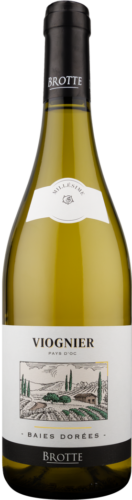
Marsanne is a temperamental grape that when cultivated carefully can produce rich, elegantly scented wines, imparting a nutty, mineral component. While it is more than capable of standing on its own as a varietal wine (Chapoutier's Ermite being on of the finest examples), it also forms a great marriage with higher acid wines such as Roussanne and Viognier. While it originated in the northern Rhone, where it was named after the town it where it was thought to have been discovered, Marsanne has spread across the globe. Most plantings reside in Australia. It was one of the first grapes brought over from the old Wold however due to its finicky nature extra care and attention in the vineyard is paramount in producing quality wines. Penfold's Prodigy John Duval is a leading producer making a Marsanne Roussanne and Viognier Rhone style blend called the Plexus. Interest in Marsanne is picking up gradually in California however it will be a long time until it becomes anything like a mainstream varietal. Even the biggest Marsanne producers in the state, such as Qupe, Cline and Tablas Creek, maintain just than a handful of acres each. Washington State may prove to be the next hot bed for the varietal as producers continue to experiment with the Rhone style blend. The grape is also cultivated in north east Spain, where it goes by the name Marsana and in the Valais region of Switzerland. The Swiss refer to it as Ermitage Blanc and make a variety of styles ranging from bone dry to complex sweet wines.
The Rhone is one of France’s most important wine regions. Divided into two separate zones, the north is probably the most prestigious. It is home to the appellations of Condrieu, Côte Rôtie, St. Joseph, Hermitage, and Crozes-Hermitage. Syrah is king with the exception of the Condrieu (100% Viognier) and Hermitage, which also makes big whites from Marsanne and Roussanne. The South is a much larger region where most Cotes du Rhone and Cotes du Rhone Village come from. In the villages of Châteauneuf-du-Pape, Gigondas, Vacqueyras, and Rasteau, Syrah is blended in varying proportions with Grenache, Mourvedre, Cinsaut, and a host of obscure varieties such as Muscardin, Vaccarese, Terret and Counoise, to produce full-bodied reds brimming with energy.
Châteauneuf-du-Pape is the most famous village in the southern Rhone. It is here that Grenache, the primary varietal, is arguably at its very best. Syrah, Mourvedre, and Cinsaut are also normally included however the proportions can vary significantly from producer to producer. In some cases (Château Beaucastel), all thirteen permitted varieties are included. They are often very age-worthy wines with incredible depth and concentration, and which develop complex secondary aromas including dried fruit, spice and earth.
White wine is a wine whose color can be pale-yellow, yellow-green, and yellow-gold colored. The wine is produced from a variety of grape varieties. The flavor and color comes from the juice of the grape and sometimes the skin of the grape as well. Interestingly, not all white wine comes from white grapes. Some select red grapes are used as in Champagne.