Product Review
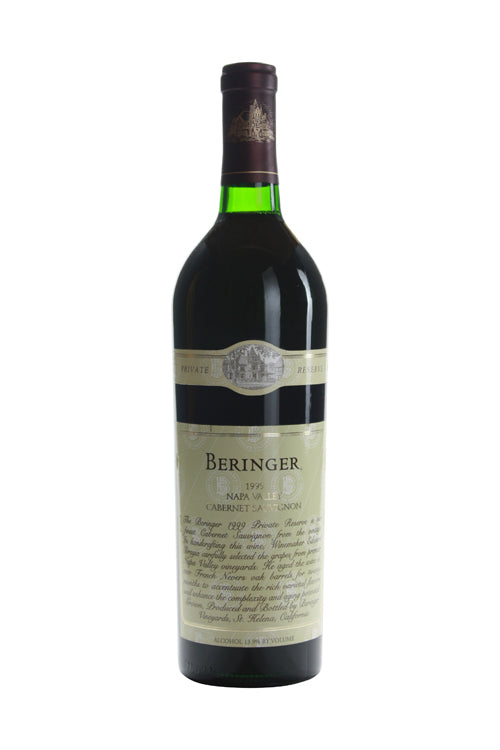
Production: 12,500 cases; Alcohol: 13.9%; Blend:100% Cabernet Sauvignon; Harvest Dates: October 12 to November 3.The 1999 Private Reserve was made from four fruit sources, the St. Helena Home Vineyard, Bancroft Ranch, Tre Colline and Marston Ranch. According to Ed Sbragia, the growing season in 1999 is largely remembered for its moderate temperatures, late start because of erratic spring weather and one of the coldest Septembers anyone can remember in Napa Valley. In late September, temperatures finally hit the nineties, and October was beautiful. This appears to be a very good rather than great Napa vintage and many producers may have pulled the harvest trigger too soon. Beringer’s 1999 Private Reserve reveals a dense purple color along with a flinty, herbal, austere personality that comes across like a young Medoc. Still vigorous, primary and unformed at age 13, it does not reveal the volume and ampleness I would expect of a top-flight Cabernet Sauvignon from either Beringer or Napa Valley. There is decent
Cabernet Sauvignon is one of the most prominent dark-skinned grape varieties except Merlot in terms of area under vines, but which comprises our largest selection of wines. Grown in just about every wine producing region and climate, Cabernet Sauvignon can express a huge range of aromas, from green peppers in cool climates through to dark jammy fruit in hot regions. Common aromas include blackcurrants, mint, graphite, and forest floor, to name a few. Maturation in small oak barrels can develop a complex range of aromas from cedar wood, cigar box and tobacco to eucalyptus and undergrowth. Cabernet Sauvignon’s success is partly due to its ability to adapt to a range of soils and climates. It is the main constituent of the Bordeaux blend in the revered communes of Pauillac, St. Estephe and St. Julien, and has achieved equal success in California’s Napa Valley. It is grown extensively throughout Southern Australia, with some outstanding examples from the Terra Rossa soil of Coonawarra. Cabernet Sauvignon also plays an increasing role in Tuscany, Italy, where it is blended with native varieties such as Sangiovese to produce the Super Tuscans.
California is one of the most diverse wine producing regions of the world. Although it has a history spanning over 200 years, it has experienced most of its growth in the last fifty years. The regions of Napa Valley and Sonoma County have become as renowned as France’s Bordeaux and Burgundy. While Cabernet Sauvignon, Pinot Noir, and Chardonnay are by far the most popular fine wine varieties, producers in the Golden State have also experimented with an unparalleled array of diverse varieties, including Zinfandel, Syrah, Nebbiolo, Sangiovese, and Tempranillo.
The country’s most famous wine producing region, Napa Valley stretches from the North bay of San Francisco Bay in the South, all the way up to Mount Saint Helena in the North. Although the climate is suitable for a wide range of varieties, Cabernet Sauvignon is dominant and practically synonymous with the region. To account for its geographical diversity, the valley is split up into a number of AVAs. From north to south, the valley consists of Calistoga, St. Helena, Rutherford, Oakville, Yountville, and Oak Knoll. Higher elevation sites include Howell Mountain on the east and Mount Veeder on the west. On its own, Stags Leap District is tucked into the very south east corner of the valley.
Red wine is wine made from dark-coloured grape varieties. The color of red differs based on the grapes variety or varieties used.Interestingly, black grapes yield a juice that is greenish-white. The actual red color comes from anthocyan pigments (also called anthocyanins) from the skin of the grape (exceptions are the relatively uncommon teinturier varieties, which produce a red colored juice). Most of the production centers around the extraction of color and flavor from the grape skin.