Product Review
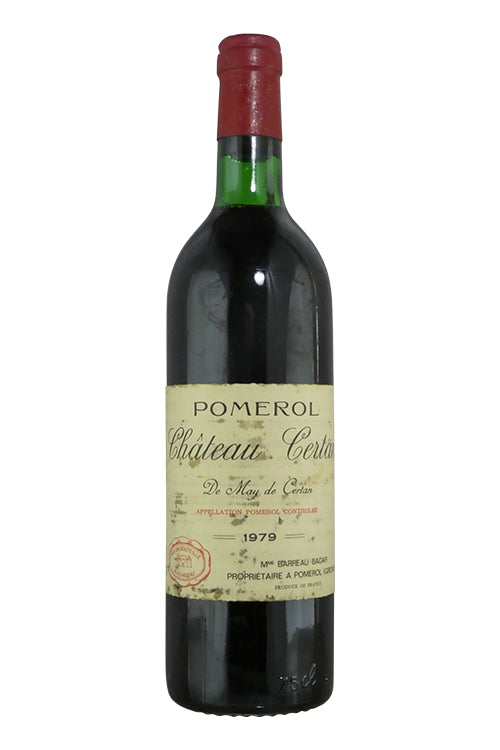
As structured, rich, and concentrated as the 1979 is, the 1978 is atypically soft, unstructured, and diffuse. Nevertheless, it is still an intriguing wine with its intensely herbaceous, spicy, peppery aromas and chunky, fleshy, herb-tinged, medium to full-bodied flavors. Similar to the 1983 because of its aromatic and flavor profile, this is a supple, weedy, fully mature wine. Drink it over the next 5-6 years. Last tasted, 4/93.
Merlot has a reputation for producing smooth, velvety wines that vary depending upon the climate and soil type. Warm conditions on clay soils often produce soft, fruit forward styles. Cool, higher elevation sites produce wine with a slightly more austere structure. It still reigns as one of the world's most noble varieties forming the majority of the blend in Bordeaux’s right bank vineyards of Pomerol and Saint-Emilion. It is now prevalent across the world, achieving particular success in South America, California, and Washington. In central Italy, Merlot is either bottled as a varietal or blended with Sangiovese and Cabernet Sauvignon to form Indicazione Geografica Tipica's (IGT), known as Super Tuscans.
Located in South West France, Bordeaux is one of the World’s most important wine producing regions. The Gironde estuary and its two tributaries, the Garonne and Dordogne, splits the region into the ‘left bank’ and ‘right bank’. The left bank, on the west side of the Gironde, consists of the Médoc and Graves, while Pomerol and St. Emilion are located on the right bank. In between the Garonne and Dordogne is the Entre-Deaux-Mers region, French for 'between two seas'. From north to south the Médoc includes the famous classed growth chateaux in the communes of St. Estephe, Paulliac, St.Julien, and Margaux. The Graves and it’s enclave Pessac-Léognan make both red and white wine. While those of Pessac- Léognan’s are dry, Sauternes and Barsac make world-famous sweet whites. Although Bordeaux makes some of the world’s most expsenive wines, less expensive but good value alternatives come from Moulis and Listrac on the left and Bourg and Blaye on the right offer less expensive wines for earlier consumption.
Located on the right bank of the Gironde, just north of St.Emilion is Pomerol, the smallest and most exclusive of Bordeaux's major appellations. The region consists of about 150 boutique size producers whose wine is primarily made from Merlot, with varying levels of Cabernet Franc. While Pomerol’s are capable of ageing as well as any other fine Bordeaux, their seductive fruit forward qualities make them very attractive in their youth. Pomerol also has one satellite region, Lalande-de-Pomerol, which offers wines in a similar style, but with less intensity and finesse, however at a fraction of the cost.
Red wine is wine made from dark-coloured grape varieties. The color of red differs based on the grapes variety or varieties used.Interestingly, black grapes yield a juice that is greenish-white. The actual red color comes from anthocyan pigments (also called anthocyanins) from the skin of the grape (exceptions are the relatively uncommon teinturier varieties, which produce a red colored juice). Most of the production centers around the extraction of color and flavor from the grape skin.